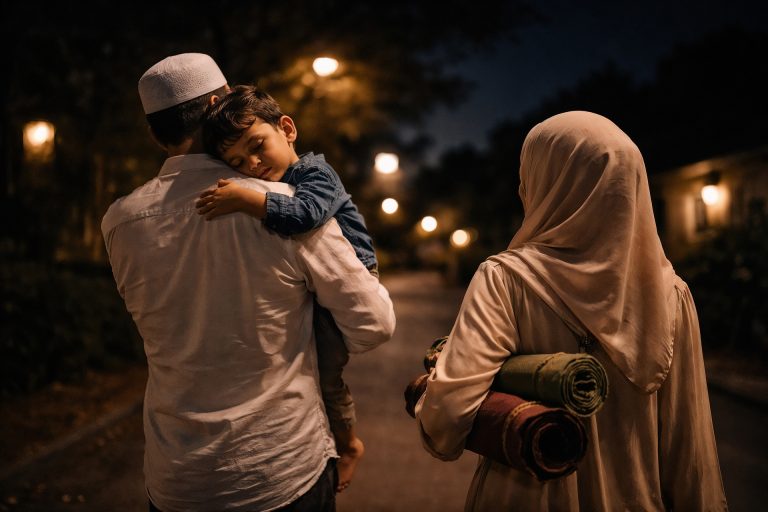
Hijab is often associated with Islam, even though Hijab- as a modesty code- is already found in other religions, too. Maybe the reason behind such a direct association is the unique adherence of the Muslim women to the hijab, since it has been decreed. Consequently, hijab has always been a notable identification of the Muslim women, among the rest.
In the following lines, let’s have an overall look at the hijab’s meaning in Islam, and its meaningful obligation, through answering some key questions that often come to mind.
What Is the Meaning of Hijab?
Linguistically, in Arabic, hijab mainly refers to a cover that keeps something, or someone out of sight, and unexposed.
Actually, that is the concept of hijab in Islam. Hijab is simply the covering dress-code for the Muslim women to keep them modestly protected, and out of the lustful sight of men.
Is Hijab Obligatory? Why?
As Islam is the religion of decency, modesty and purification- both physically and spiritually- Allah has made some practices and acts obligatory (Fardh) as they are indispensable to enable the Muslim to stay upright and purified, away from any potential evils.
Therefore, Allah, the Almighty, has made wearing hijab obligatory for Muslim women, as an essential step on the path of modesty. Also, it is actually needed to help the Muslims, both men and women, with another command, which is to lower their gaze. Reasonably, both of those decent acts are decreed as Fardh by our Creator Who already knows the best about our weakness by nature; so, Allah commands us to follow the purer, safer way:
[Tell the believing men to reduce [some] of their vision, and guard their private parts. That is purer for them. Indeed, Allāh is [fully] Aware of what they do. And tell the believing women to reduce [some] of their vision and guard their private parts and not expose their adornment except that which [necessarily] appears thereof and to wrap [a portion of] their head-covers over their chests and not expose their adornment …] [An-Nur: 23-24].
Allah commanded the Muslim men to lower their gaze, so that they can control their lust that is naturally driven by their sight. That is why it is their test to pass.
Allah also commanded the Muslim women to do the same. Yet, because women are born more beautiful and attractive by their feminine nature, Allah commanded the Muslim women to wear hijab to keep their beauty unexposed, to maintain decency, to protect chastity, and to declare commitment and obedience to Allah.
As women’s natural desire is to show their adornment, then their test to pass is to control their inclination to reveal themselves; by wearing hijab, their special beauty becomes covered and unavailable to all men, except the husbands, and those maharam (whom they can’t get married to), as mentioned in detail in the ayah:
[… and to wrap [a portion of] their headcovers over their chests and not expose their adornment [i.e., beauty] except to their husbands, their fathers, their husbands’ fathers, their sons, their husbands’ sons, their brothers, their brothers’ sons, their sisters’ sons, their women, that which their right hands possess [i.e., slaves], or those male attendants having no physical desire,4 or children who are not yet aware of the private aspects of women. And let them not stamp their feet to make known what they conceal of their adornment. And turn to Allāh in repentance, all of you, O believers, that you might succeed] [An-Nur: 24].
Hijab dignifies women, as they are naturally precious, beloved, and attractive, and that is why they need to get modestly covered and consequently protected, away from any potential abuse. That is definitely better for the women themselves, first of all. That wisdom was explicitly mentioned in Allah’s command in the Qur’an:
[O Prophet, tell your wives and your daughters and the women of the believers to bring down over themselves [part] of their outer garments. That is more suitable that they will be known, and not be abused. And ever is Allāh Forgiving and Merciful.] [Al-Ahzab: 59].
Hijab is decreed to maintain a space of respect and decency between men and women. It keeps the feminine beauty saved and treasured exclusively for only the husbands and maharam, who already deserve such a close relationship, and not anyone else out there.
That is why the Muslim women wear hijab with full appreciation, pride, confidence, and deep faith in Allah’s wisdom and mercy.
What Are the Due Conditions of Hijab?
In Islam, hijab is not just a head-cover to wear; rather, it is a full, modest dress-code, that reflects the Muslim women’s reservedness, and chastity, in both appearance and behavior, when interacting with men.
For that reason, there are some key conditions of proper hijab:
- Covering the Whole Body, except the Hands and Face:
A hijab is not covering your head, along with just random parts of your body. Hijab is a full dress code covering all your body parts decently, except your hands and your face. So, it is not hijab if you just cover a part of your head, revealing some of your hair, for example. It is not hijab if you cover your body, except for the ankles! And so on.
- Being Thick and untransparent:
Hijab is meant to ‘cover’, to ‘hide’; then, you can’t cover yourself with something transparent, as it will definitely reveal, and that is the opposite of the hijab’s goal. It was narrated that some women came to Lady Aisha, may Allah be pleased with her, wearing transparent clothes. ‘Aisha commented on that, saying: “There are not the clothes of believing women.”
- Being Loose, Not Tight:
That is reasonable. We all know that skin-tight clothes reveal the size and shape of the feminine body, which is prohibited. So, hijab is not about wrapping your body tightly; it is rather about covering yourself loosely and thoroughly. That is why tight leggings and tops have nothing to do with hijab, even though they are not transparent!
- Reflecting Discipline and Reservedness:
Hijab, in appearance, should be a reflection of deep decency and discipline, especially when it comes to dealing with men, in any possible situation in life, as we live together. As said, hijab keeps such a space of self-aware politeness, and sets limits of mutual respect between men and women, to avoid any possible abuse or any triggered misbehavior:
[… then do not be soft in speech [to men], lest he in whose heart is disease should covet, but speak with appropriate speech. And settle in your houses and do not display yourselves as [was] the display of the former times of ignorance…] [Al-Ahzab: 32-33].
- Being Different from the Men’s Wear:
Hijab is decreed specially for women to preserve their feminine beauty decently; it is a special gift for our gender, as women. Then, it should look soft and ladylike.
Furthermore, Abu Hurayrah said: “The Prophet cursed the man who wears women’s clothes and the woman who wears men’s clothes.” [Abu Daawood and Ibn Maajah]
- Being Different from the Unbelievers’ Clothes:
Not only the clothes, actually, as Muslims, but we are generally commanded not to resemble the unbelievers. We don’t just copy anything or anyone. Muslims have their own attentive standards to follow; they are really selective of the proper choices that go in line with the distinctive Islamic teachings.
- Being Not for Fame, Adornment, nor Vanity:
Muslims wear hijab rather for ‘a modest covering’, not for a red-carpet show. Muslim women’s wear should be recognized as simple, comfortable, and plain; we do not bother ourselves to copy ‘those on-fire fashion trends’ changing every day!
Hijab is meant to be unadorned in itself. It is not meant to catch the eyes of men, but rather to break free from their staring, actually.
Also, we don’t wear hijab, just for fashion, walking around with our noses in the air. As Muslims, we don’t do that, as Allah’s Messenger (PBUH) warned us:
“Whoever wears a garment of pride and vanity in this world, Allah will clothe him in a garment of humiliation on the Day of Resurrection, then set it ablaze.’”
- Being Clean, Not Perfumed:
Unfortunately, some Muslim girls go out, wearing perfumes, mistakenly thinking that there is nothing wrong with that. Indeed, it is a grave mistake to make, for Allah’s Messenger (PBUH) said:
“Any woman who puts on perfume then passes by people so that they can smell her fragrance then she is an adulteress.'”
No one can deny that perfumes are mainly made captivating and arousing. That is why perfumes are allowed only with husbands and mahrams, or when you are alone, not to other men out there.
Conclusion:
Allah, our Creator, knows us the most, and decreed the best for our good. Such essential belief is deeply rooted inside every Muslim, whether man or woman, and results in their devotion, and obedience for their Lord.
Likewise, hijab is decreed as obligatory on Muslim women, as lowering the gaze is obligatory for Muslim men. Both acts are to reserve respect, righteousness, decency, and modesty among the individuals of the whole community.